Website Setup Guide for Textile Manufacturers: Converting Zoom-in Views to RFQs
How to build a high-converting fabric website that showcases texture, color, and technical specifications.
The Problem — Why Your Current Textile Website Fails to Generate Inquiries
Most textile and fabric manufacturers treat their website as a "check-the-box" requirement. The photos are low resolution, the material content (95% cotton, 5% spandex?) is buried in long text blocks, and the mobile experience is frustrating. When a buyer can't see the weave or verify the GSM (grams per square meter) within seconds, they bounce to your competitor's site.
In the textile industry, touch is everything. Since a digital portal cannot provide touch, your website must provide "visual touch"—optical depth that builds confidence.
Ready to upgrade your B2B website?
Get a custom quote based on your exact manufacturing requirements within 2 hours.
The Solution — High-Converting Website Architecture for Textile Exporters
1. The "Texture-First" Product Gallery
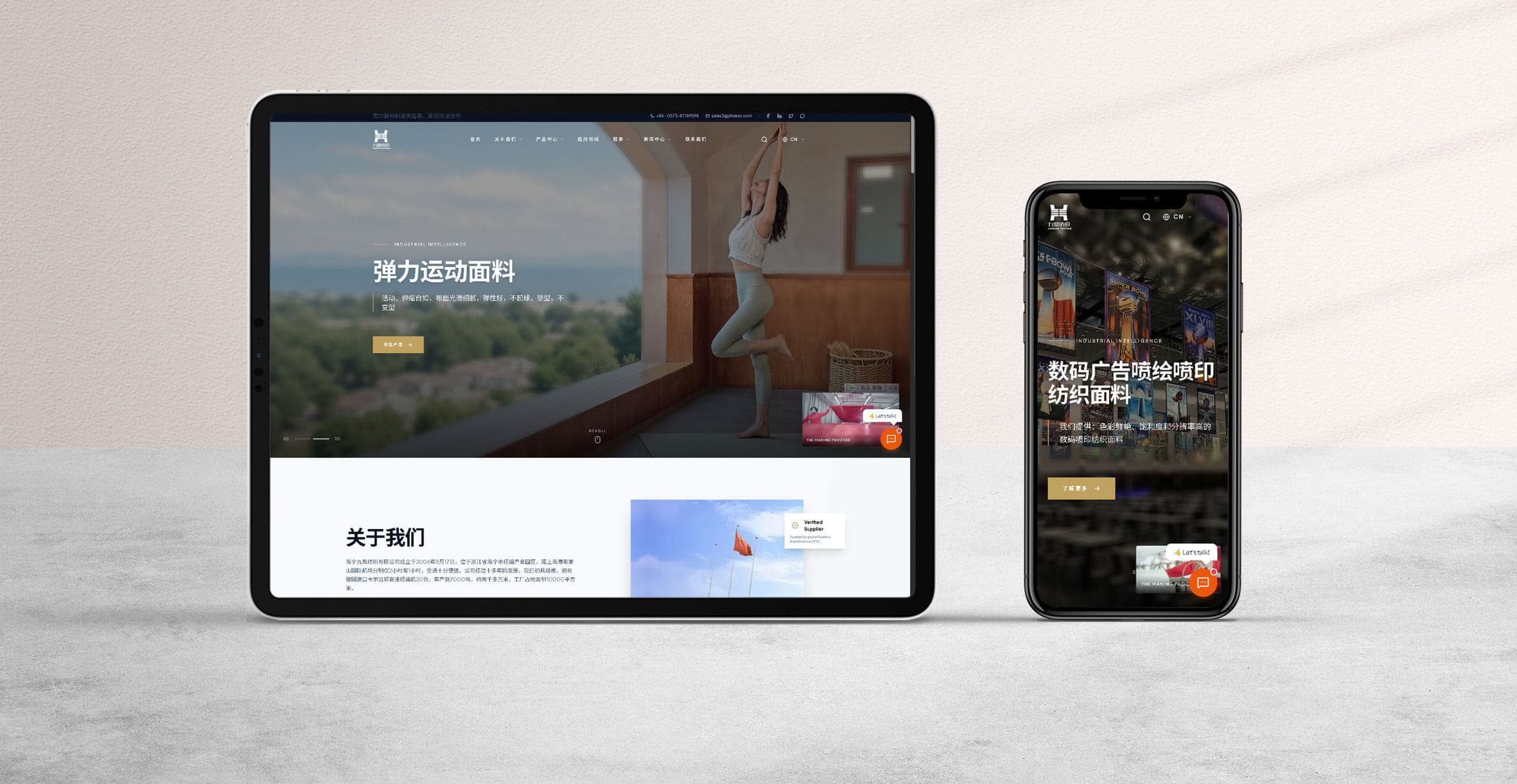
Professional buyers need to see the fiber. Every product page should feature a high-resolution zoom-in gallery. Include a shot of the fabric draped, a macro shot of the weave, and a hand-held shot for scale. Use a lightweight lightbox plugin to ensure speed doesn't suffer.
2. Interactive Color Grids
Stop listing colors as a bulleted list. Use interactive hex-matched color swatches. When a buyer clicks a color, the gallery should switch to show the fabric in that specific hue. Selective color filtering (e.g., "Trending Pantone 2026") positions you as an industry-leading supplier.
Common Mistakes Textile Manufacturers Make
The biggest mistake is ignoring technical certifications. Whether it's OCS (Organic Content Standard), GRS (Global Recycled Standard), or OEKO-TEX, these certificates are non-negotiable trust signals for European and North American fashion brands. These should be visible on every product page, not just tucked away on an "About Us" page.
How to Get Started (Your Next Step)
Start by auditing your top 10 best-selling fabrics. Are the GSM, Oz, and construction details (e.g., 40x40/133x72) in a searchable HTML table? If not, extract them from your PDF and put them in the code.
Want a similar website for your business? Get a free website growth plan from our B2B experts — delivered within 24 hours.
Key Takeaways & Your Next Step
Building a textile website isn't about aesthetics alone—it's about technical clarity. By providing "visual touch" and structured technical data, you eliminate friction in the buyer's journey.
Deep Dive FAQ
What is the most important technical detail for a textile website?↓
Should I put prices on my fabric website?↓
How can I prevent competitors from stealing my fabric designs?↓
Transform Your B2B Strategy
Get Your Free Website Diagnosis
Join 50+ leading manufacturers who trust MMReen to build their digital presence and generate high-quality B2B inquiries. Our experts will analyze your website and deliver a custom conversion blueprint within 24 hours.
Related Insights
B2B Website Guide for Medical Device Manufacturers: From Zero Inquiries to Qualified Leads
Why your medical device factory website is failing — and the exact blueprint to fix it.
Chemical Supplier Website Blueprint: Compliance, MSDS, and Precision Inquiry Paths
How to build trust in chemical B2B through structured data sheets and secure document access.
Building a High-Tech Furniture Website: Why Product Configurators Are the New Standard
How to handle customization, volume calculations, and material choices on your B2B furniture portal.